FACTS
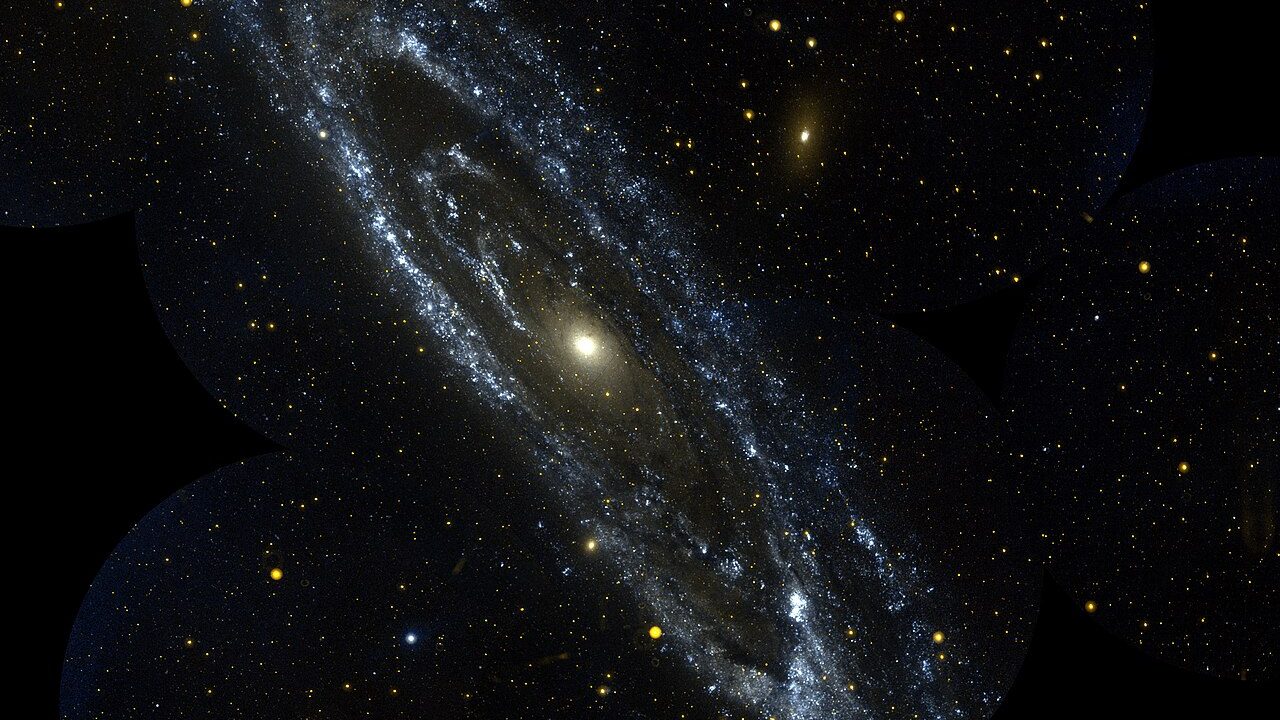
Astronomers have confirmed a stellar merger in the outskirts of the Andromeda galaxy, in which a giant star swallowed a much smaller companion, using data from several NASA telescopes, NASA announced on Wednesday, Nov. 18. The findings were published Wednesday in the journal Nature.
What the stellar merger looked like
The event is named AT 2025abao, and the scientists nicknamed it “Bao.” The larger star, which they call Big Bao, had about seven times the mass of the Sun, a radius about 350 times larger and about 18,000 times the Sun’s brightness, according to NASA. Its partner, Little Bao, had about 0.7 times the Sun’s mass.
The two stars came into contact after about seven orbits, or roughly seven years, NASA said. Little Bao then spiraled into the giant star.
“It was an absolute beast of a star, completely outshining its companion in the data,” said Karel Temmink of Radboud University, according to NASA.
How several telescopes pieced it together
The retired NEOWISE mission first flagged the system as unusual in February 2023, NASA said. The WINTER telescope saw changes in September 2024, and NASA’s SPHEREx mission observed it in July 2025.
The Zwicky Transient Facility detected the eruption on Oct. 17, 2025. NASA’s Swift observatory and the Gemini North telescope followed up in November 2025. The James Webb Space Telescope observed the system on Dec. 24, 2025, 47 days after the event’s peak brightness.
Why scientists care
“Stellar mergers are very, very difficult to observe in real time because they are hard to predict,” said Viraj Karambelkar of Columbia University, the paper’s first author, according to NASA.
Kishalay De, a co-author, compared the event to “almost like a bomb exploding inside a living star.”
The speed of the outburst surprised the team. “We thought an outburst from a such an extended star would take years,” said Nadia Blagorodnova of the University of Barcelona, according to NASA.
Many stars, especially massive ones, have a companion, and some of those pairs orbit close enough to touch. Watching a merger from the early warning signs to the final blast helps astronomers test their models of how stars in pairs live and die.
Where it happened
The Andromeda galaxy is the nearest large spiral galaxy to the Milky Way, about 2.5 million light-years away. Even at that distance, the eruption was bright enough for several telescopes to track it over years.
For more space and science news, visit the Stay Current News Science section.