FACTS
SpaceX caught a Starship upper stage with the arms of its launch tower for the first time on Saturday, Nov. 14, at its Starbase site in South Texas. The ship, known as Ship 42, was caught at 4:20 p.m. Eastern time, about 22.5 hours after it launched Friday evening, according to Space.com. The Super Heavy booster that launched it was lost in the Gulf of Mexico after it called off its own catch.
Update: This story follows an earlier Stay Current News report that described the ship catch as planned. The catch has now happened, and this story reports the result: Stay Current News: SpaceX Starship Flight 15 reaches orbit after booster catch is called off.
How SpaceX caught the Starship upper stage
Starship lifted off at 5:47 p.m. Eastern time on Friday, Nov. 13, on its 15th flight, according to Space.com. The ship reached orbit, deployed 26 Starlink V3 satellites and circled Earth about 14 times before returning to Starbase, according to Space.com and Teslarati. Starlink satellites photographed the ship’s heat shield in orbit, and SpaceX teams judged it to be in good shape for the return, Space.com reported.
The tower’s two mechanical arms, which SpaceX calls “chopsticks,” closed around the ship as it descended, ending the flight. SpaceX had caught Super Heavy boosters this way on three earlier test flights, Space.com reported. The ship is a harder target because it flies higher, farther and faster than the booster. Teslarati reported it was the first time any company has caught an orbital rocket’s upper stage at its launch site.
“That was the missing link,” SpaceX’s Dan Huot said on the company’s webcast, according to Space.com. “We caught a Starship, and now everything changes.”
SpaceX’s Jessie Anderson said, “One of the most incredible and historic engineering feats of all time has just happened right in front of our eyes.”
Flight 14, on Sept. 28, was the only earlier Starship flight to reach orbit. It ended in a splashdown in the Pacific, Teslarati reported.
The booster
The Super Heavy booster, Booster 22, did not return to the tower Friday. Space.com reported it diverted to a splashdown in the Gulf of Mexico after a low-fuel alarm. “The booster aborted itself for a GNC issue that it detected and that put it into its landing offshore,” Huot said, according to Teslarati, referring to the guidance, navigation and control system.
SpaceX founder Elon Musk said the booster ran short of propellant because its engines slightly underperformed, Teslarati reported. He said the company would improve engine consistency and change flight software to shut the engines down “about one second earlier.” “This booster loss does not change our timeline to reach high volume, fully reusable Starship flights,” Musk said.
Why the catch matters to SpaceX
SpaceX’s stated goal, as Musk’s comment reflects, is a fully reusable rocket in which both the booster and the ship return and fly again. SpaceX will probably try to catch both the booster and the ship on the next flight, Space.com reported. Musk has said he expects Starship to reach a weekly launch rate in the first half of 2027, according to Teslarati. Teslarati noted that reusable ships are needed for Starlink V3 launches and for NASA’s Artemis lunar lander, which depends on repeated refueling flights in orbit.
China’s state news agency Xinhua also reported the catch.
SpaceX has not announced a date for the next Starship flight.
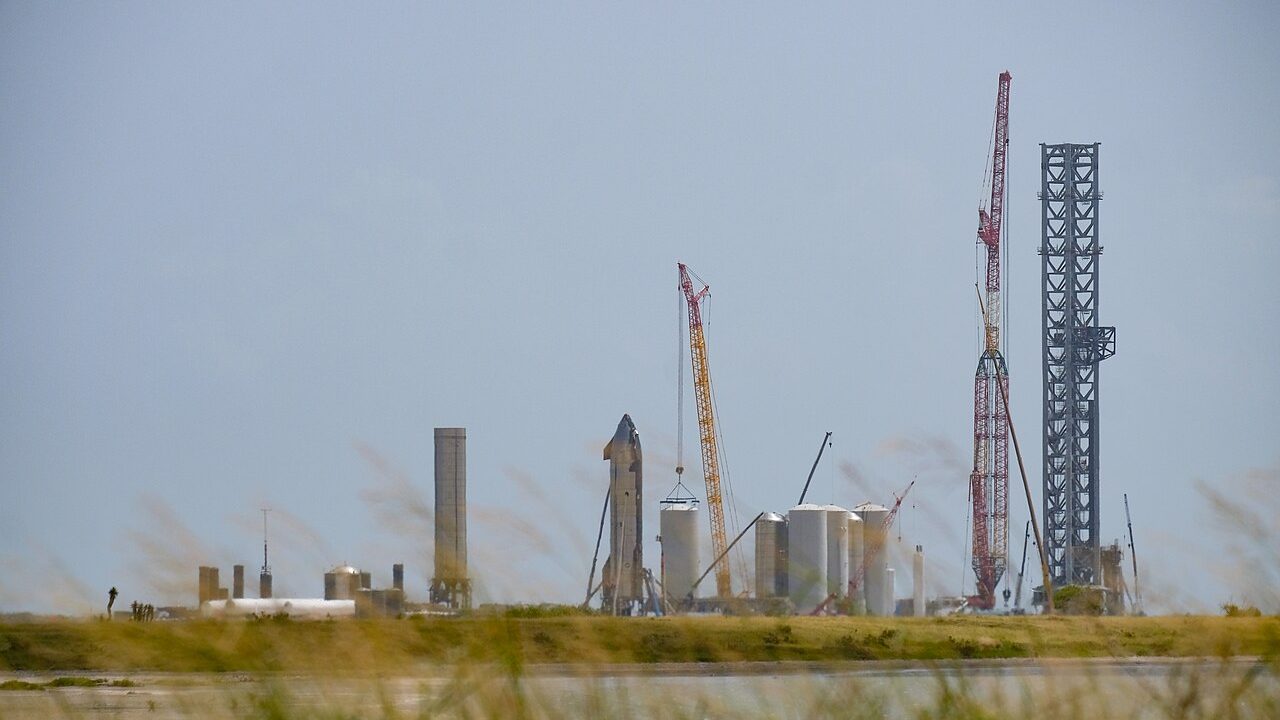
Photo: File photo of SpaceX’s Starbase launch facility in Texas. Lars Plougmann / Wikimedia Commons, CC BY-SA 2.0.