FACTS
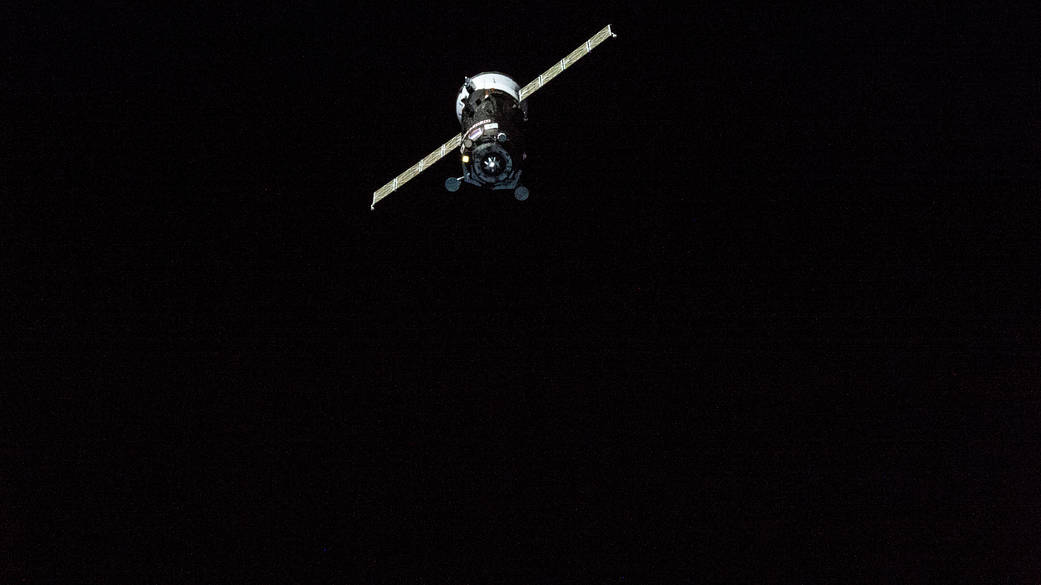
Russia’s Progress MS-36 cargo ship launched on a Soyuz rocket from the Baikonur Cosmodrome in Kazakhstan at 5:17 a.m. EST on Tuesday, Nov. 24, and is “safely in orbit,” NASA said. The uncrewed Roscosmos spacecraft, which NASA calls Progress 97, is carrying about three tons of food, fuel and supplies to the International Space Station. NASA said it is scheduled to dock automatically at about 7:11 a.m. EST on Thursday, Nov. 26, Thanksgiving Day.
Progress MS-36 cargo ship launch and docking plan
Liftoff came at 3:17 p.m. local time at Baikonur, according to NASA. Russian state news agency TASS reported that the ship flew on a Soyuz-2.1b rocket and “successfully separated from the third stage” of the launch vehicle.
After a two-day trip, the spacecraft is to dock to the Earth-facing port of the station’s Rassvet module, NASA said in its launch update. NASA said it will stream the arrival live starting at 6:30 a.m. EST Thursday.
Space.com, citing Anatoly Zak of the website RussianSpaceWeb.com, reported a different docking plan in its launch story: unloading at the Poisk module, then a move to the aft port of the transfer tunnel that leads to the Zvezda service module. That port is the best spot for engine burns that raise the station’s orbit, but cargo cannot be unloaded there because the tunnel has been sealed off over an air leak first documented in 2019, Space.com reported. NASA’s launch day updates named the Rassvet module.
What the cargo includes
TASS reported that the cargo weighs more than 2.4 tons. It includes 750 kilograms (about 1,650 pounds) of fuel for the station, 420 kilograms (about 925 pounds) of drinking water, 261 kilograms (about 575 pounds) of food including fresh produce, 51 kilograms (about 112 pounds) of oxygen and 657 kilograms (about 1,450 pounds) of equipment and supplies for the crew’s scientific work, according to TASS.
The ship also carries hardware for several Russian experiments, TASS reported, including the control system for Teledroid, a robot meant to help cosmonauts with work on the outside of the station. TASS said the robot has a two-armed torso with 30 degrees of freedom, can copy a cosmonaut’s movements through an exoskeleton and can do some tasks on its own. Yevgeny Dudorov, the project’s chief designer, said the mission includes about 40 test sessions, according to TASS.
Launch delays and the crew
Space.com reported that the mission was first expected to launch in August and was delayed mainly by the November 2025 collapse of the service platform at Baikonur’s Site 31, which took about three months to repair. The outlet said the freighter is likely to stay at the station for about six months before it is filled with trash and sent to burn up in Earth’s atmosphere.
Seven people live aboard the station as part of Expedition 75, according to NASA: NASA astronauts Jessica Watkins, Luke Delaney and Anil Menon, Canadian Space Agency astronaut Joshua Kutryk, and Roscosmos cosmonauts Pyotr Dubrov, Sergey Teteryatnikov and Anna Kikina. Space.com reported that the three cosmonauts will unload the cargo.
Another cargo ship is next
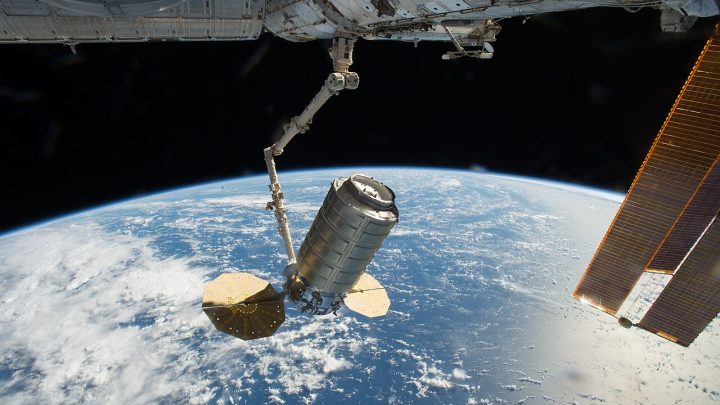
NASA said Northrop Grumman’s NG-25 Cygnus XL spacecraft is set to launch on a SpaceX Falcon 9 rocket from Cape Canaveral no earlier than 10:47 a.m. EST on Sunday, Nov. 29, with about 11,000 pounds of science experiments and lab hardware. Watkins and Delaney are scheduled to capture it with the station’s Canadarm2 robotic arm on Tuesday, Dec. 1, according to NASA. Stay Current News reported on that mission’s plans in NG-25 Cygnus named for Jim Lovell set for Nov. 29 launch.
More science news is on the Stay Current News Science page.