FACTS
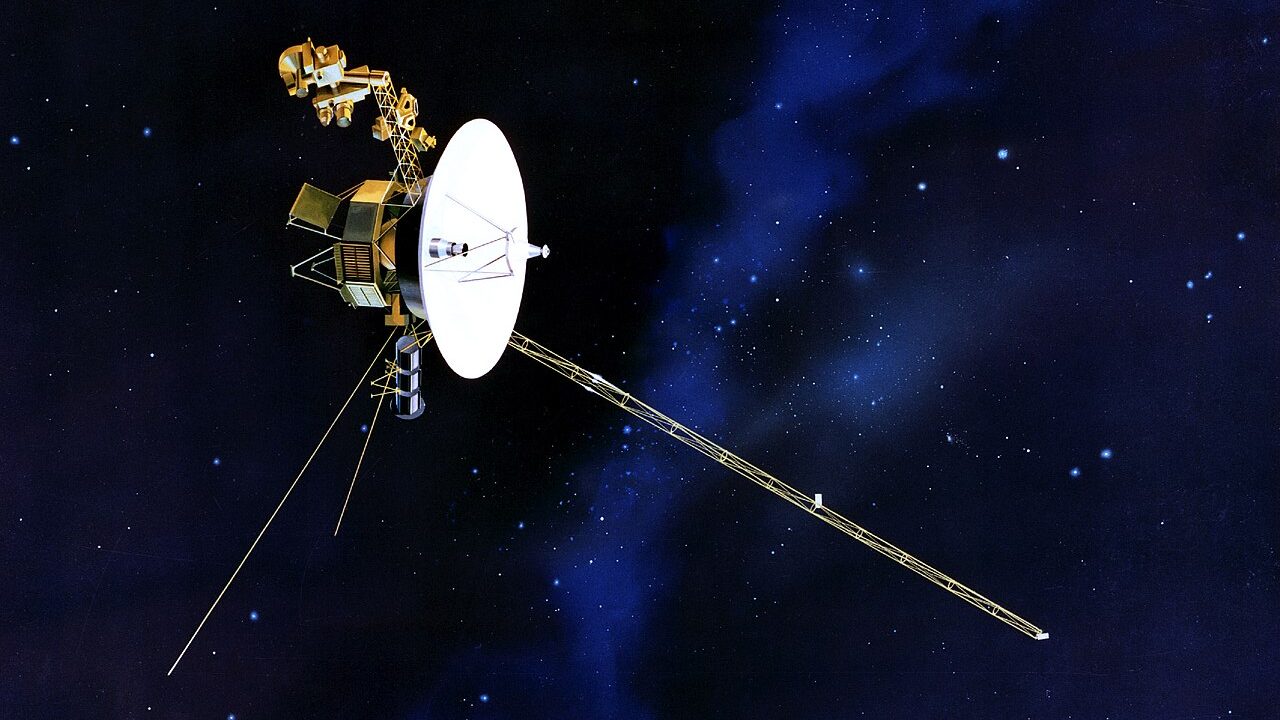
NASA’s Voyager 1 passed the Voyager 1 light-day milestone at 2:16 a.m. PST on Wednesday, Nov. 18, 2026, reaching a distance from Earth that light takes a full day to cover, about 16.1 billion miles, NASA said. The milestone came while the 49-year-old probe has sent no science or engineering data since Nov. 14. Engineers at NASA’s Jet Propulsion Laboratory are working to find the cause.
How NASA confirmed the Voyager 1 light-day mark
One light-day is about 16.1 billion miles, or 25.9 billion kilometers, according to a NASA news release issued Nov. 19. A radio signal now takes 24 hours to travel each way between Earth and the spacecraft. The mission team confirmed the milestone when it heard from Voyager 1 early on Nov. 19, using the probe’s carrier signal and trajectory calculations, the agency said.
Voyager 1 travels at about 38,000 mph, or 61,155 kph, on a known path, and engineering problems could not change when it reached the mark, NASA said in a Voyager mission blog post on Nov. 18.
Voyager 1 and its twin, Voyager 2, launched in 1977. Voyager 1 became the first spacecraft to enter interstellar space in 2012, and Voyager 2 followed in 2018, NASA said.
Data stopped on Nov. 14
The team learned on Nov. 14 that Voyager 1 had stopped sending science and engineering data, when a Deep Space Network antenna in Canberra, Australia, picked up the spacecraft’s carrier signal with no data on it, according to the blog post. The carrier signal shows that the probe’s attitude control computer is keeping it pointed at Earth and that its antenna and transmitter work, NASA said. The agency said the lack of data points to the onboard computer that collects information from the spacecraft’s systems and instruments and formats it for sending home.
Because each command and reply takes a day to travel, NASA said, diagnosing the problem is “a drawn-out process” that may take weeks or longer. Engineers are also checking whether the problem is connected to a communications gap in October.
In that earlier episode, the Deep Space Network could not detect Voyager 1 during scheduled contacts on Oct. 18 and 19, and the signal returned Oct. 20, NASA said in an Oct. 29 update. The team found that one group of thrusters had gone offline and that the spacecraft’s fault protection had switched to backups and paused normal operations. “This is the first time we’ve seen the spacecraft do something like this,” Voyager mission manager Kareem Badaruddin said in that update.
A similar loss of data in 2023 was traced to one of the onboard computers, and that experience is guiding the current work, NASA said. Engineers wrote a software workaround for the 2023 problem, and the spacecraft returned to science operations in 2024, The Register reported.
Power and the road to 2027
Both Voyagers lose about 4 watts of power a year as their plutonium fuel decays, NASA said. In early September, engineers turned off three devices on Voyager 1 and replaced them with lower-power alternatives, about six weeks after making the same swap on Voyager 2. NASA said the work should let both spacecraft keep their current science instruments running until at least their 50th launch anniversaries in summer 2027. Voyager 1 launched with 10 science instruments, and two have been turned off in recent years, the agency said.
What NASA and JPL said
“Traveling a light-day is a singular feat for a spacecraft, but Voyager is so much more than a distant traveler,” said Joe Westlake, director of the Heliophysics Division at NASA Headquarters, in the release.
Linda Spilker, Voyager project scientist at JPL, said, “One big surprise is the extent to which our Sun continues to affect interstellar space, all the way out to Voyager 1.”
“We listen to Voyager 1 every day and send commands to the spacecraft weekly,” said Suzanne Dodd, Voyager project manager at JPL.
NASA said in the blog post that it expects to eventually lose both spacecraft to engineering problems that cannot be fixed, and that the team plans to keep them operating and returning science for as long as possible.
More science news is on the Stay Current News Science page.