FACTS
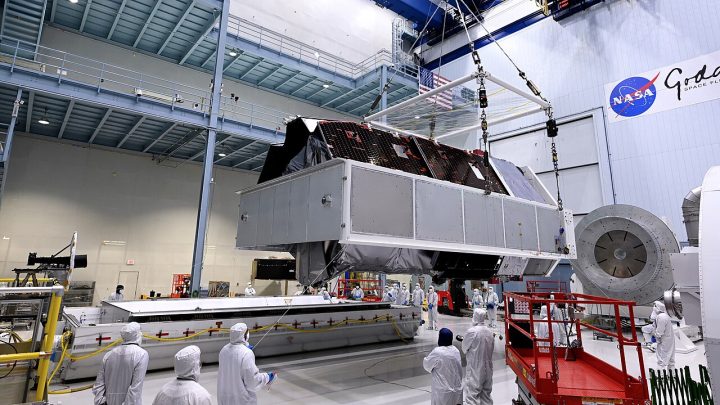
NASA, Northrop Grumman and SpaceX said Monday, Nov. 23, that the NG-25 Cygnus cargo mission to the International Space Station remains on track to launch no earlier than 10:47 a.m. EST on Sunday, Nov. 29. The Cygnus XL spacecraft, named the S.S. James “Jim” A. Lovell, will carry about 11,000 pounds of supplies and science on a SpaceX Falcon 9 from Cape Canaveral Space Force Station in Florida.
Officials gave the update in a prelaunch news teleconference that began at noon EST Monday, Spaceflight Now reported. Gaurang Patel, operations integration manager for NASA’s Low Earth Orbit Program, said the team was “not tracking any issues with the spacecraft or launch vehicle,” and that weather was being watched, according to Spaceflight Now. Patel said several team members had been affected by recent flooding in Brevard County, the outlet reported.
NG-25 Cygnus launch and arrival plan
The Falcon 9 will lift off from Space Launch Complex 40 at Cape Canaveral, according to a NASA media advisory issued Nov. 18. NASA calls the flight Northrop Grumman Commercial Resupply Services 25, or CRS-25. The booster, B1096, is set to return for a landing at Landing Zone 40, Spaceflight Now reported.
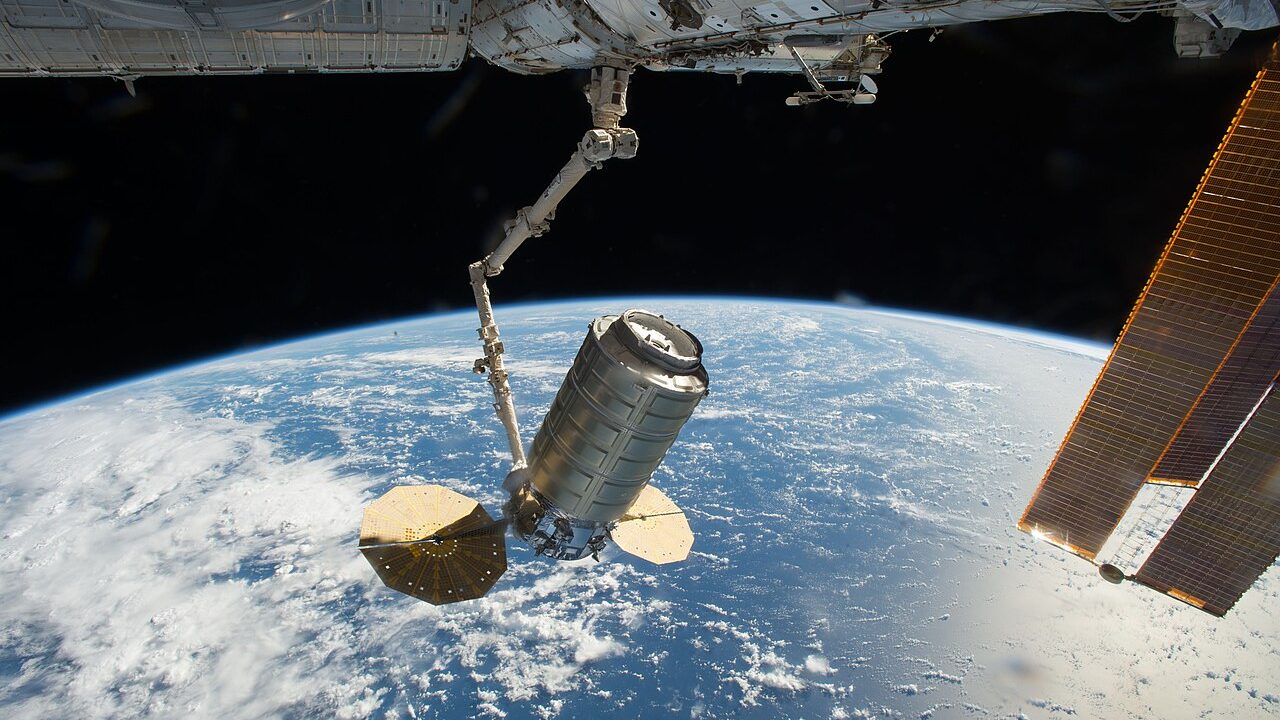
The spacecraft is scheduled to reach the station about two days after launch. NASA said astronauts Jessica Watkins and Luke Delaney will use the station’s Canadarm2 robotic arm to capture Cygnus at about 2:35 a.m. on Tuesday, Dec. 1. Ground controllers will then attach it to the Earth-facing port of the station’s Unity module, according to NASA.
Cygnus is scheduled to stay at the station until May 2027, NASA said. It will then leave with several thousand pounds of trash and unneeded cargo and burn up as it reenters Earth’s atmosphere.
Aviation Week also reported Monday that the mission is set for a Nov. 29 launch with more than 11,000 pounds of crew supplies, research and equipment.
What the cargo ship carries
NASA said the science on board includes investigations aimed at improving drug delivery for cancer and osteoarthritis, predicting how cancer spreads and advancing treatments for muscle loss. Other experiments focus on radiation sensing and on growing food for future long-duration missions, according to the agency.
Jennifer Buchli, chief scientist for NASA’s Low Earth Orbit Program, described a follow-up to a muscle loss study first flown during Expedition 65 and a nanomedicine experiment, Spaceflight Now reported. The cargo also includes fresh food, hatch seal covers and tools for upcoming spacewalks, according to the outlet.
Dave Schiller, Northrop Grumman’s vice president for civil space and sciences, said the spacecraft may perform one or more reboosts of the station if NASA asks, Spaceflight Now reported. Northrop Grumman says on its NG-25 mission page that Cygnus has delivered more than 169,000 pounds of supplies, experiments and equipment to the station since 2013.
Named for Apollo 13 commander Jim Lovell
Northrop Grumman names each Cygnus after a person who made significant contributions to human spaceflight, according to the company. NASA said Lovell flew on Gemini VII, Gemini XII, Apollo 8 and Apollo 13. Northrop Grumman noted that the Apollo 13 crew used the lunar module, which the company describes as Northrop Grumman-built, as a lifeboat after an oxygen tank failure forced them to abandon their Moon landing.
Lovell died Aug. 7, 2025, in Lake Forest, Illinois, at age 97, NASA announced at the time, according to PBS NewsHour.
Future Cygnus launches and Moon missions
Asked about Northrop Grumman’s Antares 330 rocket, Schiller did not give a readiness date. “We will share any additional details about availability as they become available,” he said, according to Spaceflight Now. He said one more Falcon 9 remains available for Cygnus and that “we do not anticipate a gap in any of the launch provider launch manifests for Cygnus,” the outlet reported.
Schiller also said the first Lunar Infrastructure Demo mission, which reuses hardware first built for NASA’s Gateway lunar station, is planned to launch to the Moon at the end of 2027, with two more planned at the ends of 2028 and 2029, according to Spaceflight Now.
NASA said it will stream launch coverage starting at 10:25 a.m. EST on Nov. 29 on NASA+ and its website.
More science news is on the Stay Current News Science page.