FACTS
COP31 ends without deal on its main political text: the United Nations climate talks in Antalya, Turkey, closed Sunday, Nov. 22, 2026, after nearly 200 countries could not reach consensus on an overarching cover decision, The Associated Press and UN News reported. The European Union and several other countries rejected the draft because it did not mention fossil fuels, while Russia and Saudi Arabia “pushed to keep fossil fuels out of the document,” AP reported. Some narrower decisions, including one on a just transition, were adopted.
Why COP31 ends without deal on a main text
The draft, which Down To Earth reported was titled the Antalya Pact, came from Turkey, the host, and Australia, which led the negotiations. It made no explicit mention of oil, gas or coal and referred only to the 2023 Dubai climate outcome, Fox Business reported with Reuters. It set a target for industrial carbon capture of at least 500 million metric tons of carbon dioxide a year by 2035 and proposed raising electricity’s share of global final energy use to 35% by 2035.
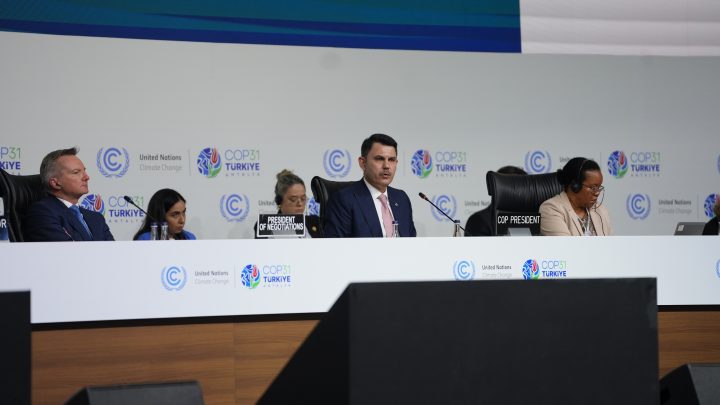
“I understand that there is no agreement on this text. For that reason, these decisions have not been adopted,” COP31 President Murat Kurum, Turkey’s environment minister, said, according to UN News.
The talks ran about two days past their Friday deadline, becoming the longest COP on record, The Independent reported. It was the first UN climate summit without an overarching agreement since Copenhagen in 2009, Fox Business reported. China and India said they had objections but chose to accept the text, The Independent reported.
What was adopted
Countries adopted a Just Transition Work Programme decision, while putting off the structure of a proposed Belem-Antalya Mechanism to COP32, along with decisions on the Adaptation Fund, carbon markets and transparency, a two-year work programme on mountains, and an Antalya-Addis Ababa Road Map on adaptation finance, Down To Earth reported. Texts on the Mitigation Work Programme and the Global Environment Facility did not reach consensus, The Wire reported. Fox Business reported that the African Group stalled a long-term finance decision and that Russia blocked an Action for Climate Empowerment plan.
Work on transitioning away from fossil fuels, adaptation finance and gender was pushed to next year’s talks in Ethiopia, AP reported.
European Union
“It’s unconscionable that we would have a climate act that makes no reference to fossil fuels,” Irish Climate Minister Darragh O’Brien, speaking for the EU, said, according to AP. EU climate commissioner Wopke Hoekstra told reporters an agreement that leaves out fossil fuels is “not acceptable,” NPR reported.
Small island states and Panama
“It seems like we are negotiating with the Saudis,” Tuvalu’s climate minister, Maina Talia, said during the conference, The Independent reported. The Marshall Islands said, “We have been let down on all sides,” The Wire reported. Panama’s environment minister, Juan Carlos Navarro, said, “We cannot continue to be held hostage by petroleum producers,” CBS News reported.
Saudi Arabia, the Arab Group and Russia
Saudi Arabia defended the draft’s carbon capture references, UN News reported. A Saudi representative expressed surprise at resistance to technology, calling it a “concrete solution,” The Independent reported.
Earlier in the talks, the Arab Group and Russia rejected a previous draft, opposing “language that targets specific energy sources,” “top-down sectoral targets” and the 35% electrification goal, the Earth Negotiations Bulletin reported. Russian presidential climate envoy Ruslan Edelgeriev said in a statement to the leaders’ summit that the move to a low-emission economy must be fair, criticized pressure for a forced move away from hydrocarbons, and said Russia rejects unilateral trade restrictions.
African Group and India
Ghana, for the African Group, said the text “gives no baseline and no figure” for tripling adaptation finance, The Wire reported. “We regret that consensus on the cover decision could not be reached,” Indian Environment Minister Bhupender Yadav said, according to The Wire.
Presidency and UN leaders
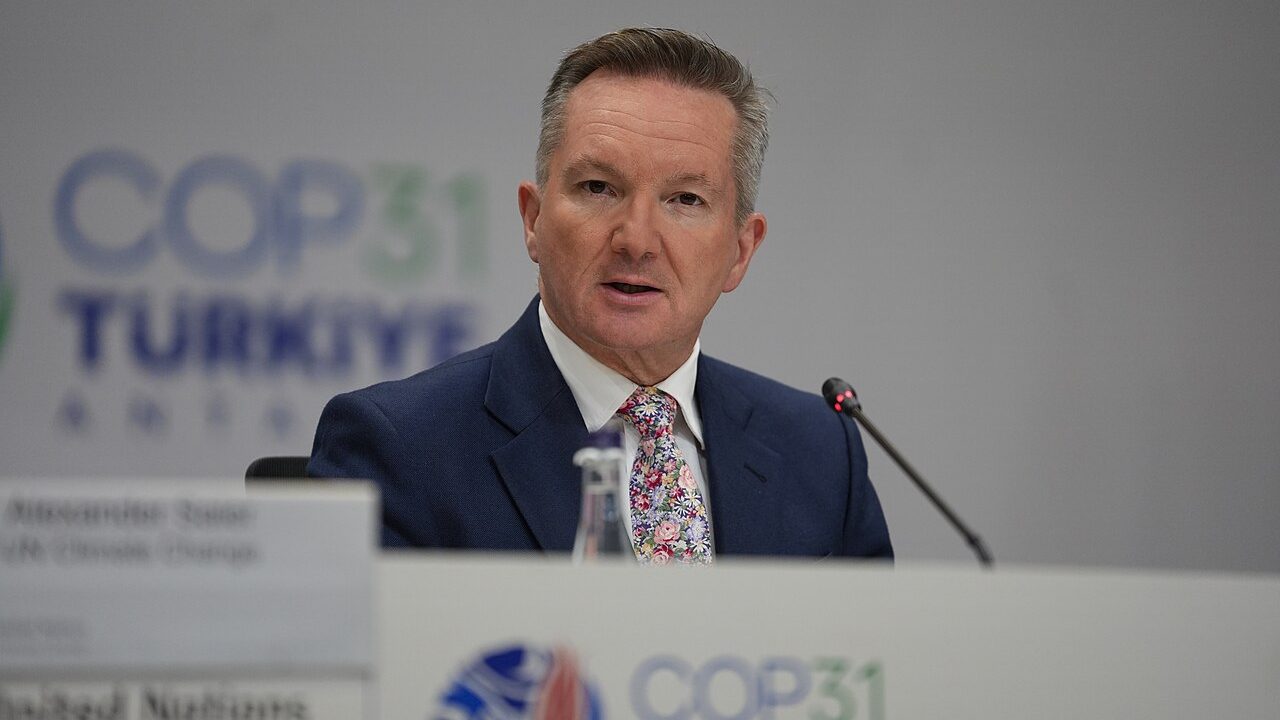
“Unfortunately, we were unable to reach agreement on a cover decision. And that’s disappointing, very disappointing,” said Australian Climate Minister Chris Bowen, COP31 president of negotiations, AP reported. “Transition away from fossil fuels in the real world is happening,” Bowen said.
“There may be no consensus in the negotiating room. There is no ambiguity in the science,” UN Secretary-General Antonio Guterres said, UN News reported.
UN Climate Change Executive Secretary Simon Stiell said in closing remarks that “key negotiating decisions have been made including on a Just Transition” and, UN News reported, that “the world cannot afford a repeat of this moment.”
Update: This story updates our Nov. 21 report, COP31 climate talks run into overtime with no fossil fuel deal. Since then, the main draft was rejected and the conference closed.