FACTS
The COP31 talks in Antalya, Turkey, reached their scheduled final day on Friday, Nov. 20, without an agreement, Reuters and AFP reported. A revised draft released Thursday by co-host Australia removed all mention of oil, gas and coal, according to AFP. Host Turkey says it has secured deals and plans worth more than $26 billion since the conference opened on Nov. 9, Reuters reported.
What changed in the COP31 talks draft
The first draft of the summit’s main “cover decision,” published Monday, Nov. 16, ran 18 pages. In that UNFCCC draft text, one paragraph “Calls for accelerated action to phase out fossil fuels,” and another said tripled adaptation finance “should reach at least USD$120 billion.”
The second draft, released Thursday afternoon, runs nine pages, RTÉ News reported. It drops the call for a faster fossil fuel phaseout and the wording on speeding up the move away from coal, oil and gas agreed at COP28 in Dubai in 2023, RTÉ said. According to Climate Home News, it also drops wording that welcomed a fossil fuel transition roadmap prepared by Brazil’s COP30 presidency, and it replaces the $120 billion figure with a request for a report on the tripling baseline by COP32.
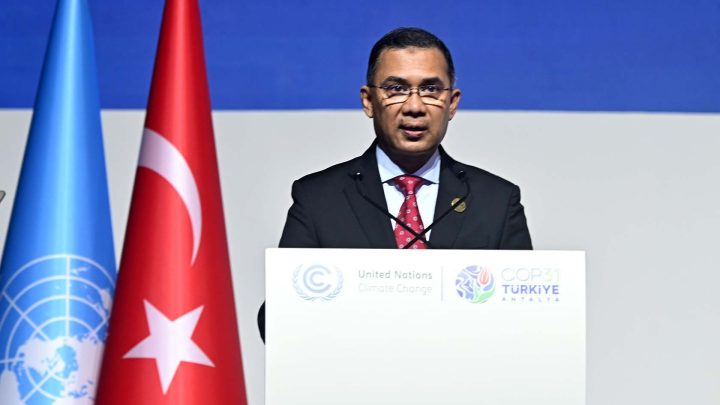
The new draft keeps Turkey’s goal of raising electricity’s share of global final energy use to 35% by 2035, UN News reported, and it acknowledges that warming is likely to overshoot the 1.5 degrees Celsius limit in the Paris Agreement. COP31 President Murat Kurum described the text as the “Antalya Declaration,” RTÉ reported. Australian Climate Minister Chris Bowen, who is steering the negotiations, called it the best basis for an agreement and said consultations would continue until there is a clear consensus, according to RTÉ and AFP.
Decisions at UN climate talks require consensus, so a single country can block a deal, AFP has reported. Reuters noted that UN climate conferences often run past their scheduled end.
Oil producers and the Arab Group
In consultations on Nov. 17, the Arab Group raised concerns about the legitimacy of the process and rejected references to roadmaps and top-down sectoral targets, according to the Earth Negotiations Bulletin. Climate Home News reported that the group does not want new sectoral goals in the text and is pushing for carbon capture and storage, and that Saudi Arabia, Russia and other producers oppose language on transitioning away from fossil fuels.
Saudi Arabia and India are among a smaller group that wants the next reports from the UN’s climate science panel, the IPCC, delayed until 2029, AFP reported. Saudi Arabia’s delegation said the kingdom supports timelines that allow thorough scientific review and meaningful participation, especially by developing countries, according to AFP via Arab News.
Small island states
The Alliance of Small Island States supports “transitioning away from fossil fuels,” the Earth Negotiations Bulletin reported. AOSIS chair Ilana Seid told AFP the IPCC report must be ready for the 2028 global stocktake and that any delay “is unjustifiable to us.” Tuvalu’s Maina Talia said there was still “a small window of opportunity” to keep fossil fuel transition language, Climate Home News reported.
The European Union and others
An EU official said the latest draft was “not acceptable and not ambitious enough,” adding, “We don’t want this COP to become a ‘fossil’ COP,” RTÉ reported. European Climate Commissioner Wopke Hoekstra said the EU would judge the text on whether it responds to the climate crisis, carries out existing agreements and fits the EU’s mandate, according to RTÉ. French Ecological Transition Minister Monique Barbut called the omission of fossil fuels a “black mark,” AFP reported.
African and least developed countries want the adaptation goal set at no less than $120 billion a year by 2035, while wealthy governments have resisted new adaptation funding, citing budget limits, and want major emerging economies such as China to contribute, according to Climate Home News and AFP. “At this point, no one is happy,” Brazil’s national secretary for climate change, Aloisio Lopes Pereira de Melo, said, according to RTÉ.
Turkey’s $26 billion in deals
Turkey’s deals include a preliminary $15 billion renewable energy agreement with China, $5.1 billion in financing from development banks, and accords with Saudi Arabia and Canada, Reuters reported, as carried by the Cyprus Mail. Turkey did not comment on the deals, Reuters said. Oyku Senlen of the think tank E3G told Reuters the deals fit “Turkey’s energy transition pathway.”
Stay Current News reported on the first draft in COP31 draft deal offers two fossil fuel options.
More science news is on the Stay Current News Science page.