FACTS
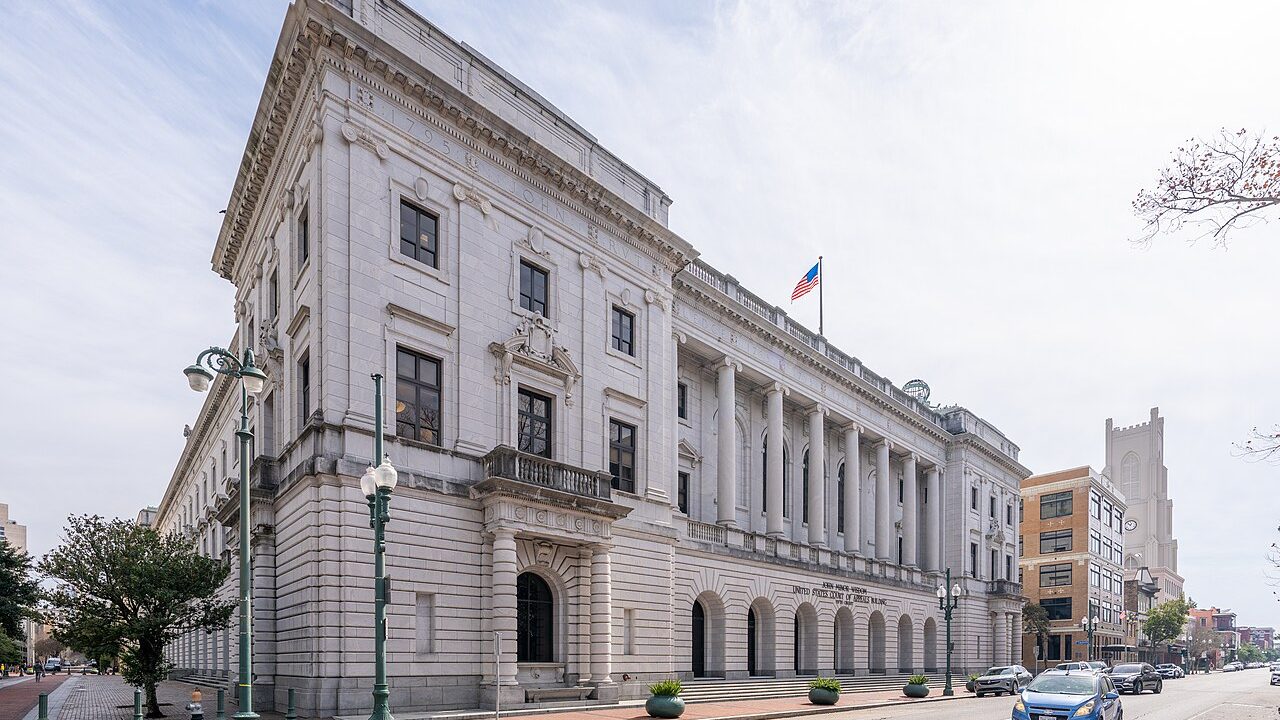
The full 5th U.S. Circuit Court of Appeals ruled 9-8 on Friday, Nov. 20, that the U.S. House violated the Constitution’s Quorum Clause when it passed the 2022 spending law that contains the Pregnant Workers Fairness Act, because a quorum was reached only by counting members recorded present by proxy. The court affirmed an order that bars the federal government from enforcing the Pregnant Workers Fairness Act against the state of Texas as an employer. The case is Texas v. Blanche, No. 24-10386.
What the court decided on the Pregnant Workers Fairness Act
Judge Cory T. Wilson wrote the majority opinion, joined by Chief Judge Elrod and Judges Jones, Smith, Willett, Ho, Duncan, Engelhardt and Oldham. The court sat en banc, with 17 judges taking part, after the court vacated a 2025 decision by a three-judge panel that had upheld the law.
The law at issue is the Consolidated Appropriations Act of 2023, a $1.7 trillion funding package passed in December 2022, while the House was using a COVID-19 rule that let members record their presence and votes by proxy. The opinion says the final House vote was 225 to 201, and that 226 of the 427 members who recorded a vote, a majority of the House, recorded their presence and vote by proxy.
“Members must be present to satisfy the Quorum Clause. Presence-by-proxy does not suffice,” the majority wrote. It also wrote, “‘Proxy presence’ does not count.” The court said that “the Quorum Clause’s constraints on congressional power cannot be circumvented by congressional fiat.”
The majority said its ruling is limited. “While we conclude today that the House’s passage of the Act violated the Quorum Clause, our decision extends no further than affirming the relief awarded by the district court,” it wrote, noting that Texas “did not request” relief “undoing every provision of the Act as to everyone across the country.” It left open other questions, including attendance by video.
The dissent
Judge James E. Graves Jr. wrote the main dissent, joined by Judges Stewart, Richman, Southwick, Higginson, Douglas and Ramirez. “But the plain text of the Quorum Clause contains no physical presence requirement,” Graves wrote. He said the House rule was a valid use of each chamber’s power to set its own rules. The dissent also noted that Texas had accepted most of the money the law appropriated to it while challenging its protections for pregnant workers, the Associated Press reported.
Judge Haynes also dissented. A footnote in the opinion says she does not think it is appropriate to throw out the work of the House in this way and that she appreciates Graves’s dissent.
What the law requires and who brought the case
The Pregnant Workers Fairness Act took effect June 27, 2023. It requires private and public employers with 15 or more workers to provide “reasonable accommodation” for a worker’s known limitations related to pregnancy, childbirth or related medical conditions, unless doing so would cause “undue hardship,” according to the Equal Employment Opportunity Commission. The AP said examples include time off for medical appointments and exemptions from heavy lifting.
Texas Attorney General Ken Paxton sued in 2023. U.S. District Judge James Wesley Hendrix ruled for Texas in February 2024, the Texas Tribune reported. After that ruling, Paxton said in a news release that the bill passed “with fewer than half the members of the House bothering to do their jobs, show up, and vote in person,” calling it “a stunning violation of the rule of law.” Stay Current News found no new statement from Paxton’s office on Friday’s ruling as of Sunday evening.
The Justice Department under President Donald Trump has continued to defend the law, and it did not respond to an AP request for comment on Sunday, the AP reported.
Responses from advocates
A Better Balance, which pushed for the law, said in a statement that the ruling “effectively erases essential rights to pregnancy accommodations” for workers in Texas, Louisiana and Mississippi, the three states in the 5th Circuit. Its president, Inimai Chettiar, called the decision “legally unsound and short-sighted” and said, “Workers should never have to choose between a healthy pregnancy and keeping their jobs.” She said the group would defend the law “including before the Supreme Court” and called on the Trump administration to keep defending it. The court’s own order covers enforcement against Texas as an employer.
Jonathan H. Adler, a law professor at William & Mary, wrote on the Volokh Conspiracy that the ruling’s reasoning could reach other parts of the 2022 package and that he expects a Supreme Court petition.
More U.S. news is on the Stay Current News U.S. page.