FACTS
The Federal Aviation Administration says it has begun replacing air traffic control equipment that still runs on floppy disks with a digital system called the Enterprise Information Display System, or E-IDS. In a Nov. 5 announcement, the FAA said E-IDS will reach 435 sites by the end of 2028. The plan has drawn new attention after Friday’s nationwide ground stop, which federal officials have said was not a cyberattack.
This story follows Stay Current News’ reports Trump asks Congress for air traffic control money after outage and FAA ground stop lifted as officials investigate cause of outage, adding the FAA’s equipment plan and what federal auditors have found about cybersecurity.
Why the FAA is replacing floppy disks
In its Nov. 5 announcement, the FAA said E-IDS replaces four systems from the 1980s that are used in more than 400 FAA facilities, bringing them into “a single, secure system.” The agency said the change will improve how pilot weather reports and notices to air missions reach controllers. The first five sites are the Atlantic City, Nashville and Greater Rochester airports and FAA data hubs in Atlanta and Salt Lake City.
“Good news America: floppy disks are out, 21st century tech is in,” Transportation Secretary Sean Duffy said in the release. FAA Administrator Bryan Bedford said, “E-IDS gives air traffic controllers the information they need to make timely decisions and keep the flying public safe.”
The FAA also reported progress on other parts of the rebuild: 69% of copper lines replaced, a surface awareness system at 143 towers, electronic flight strips at 26 towers and 226 new IP voice switches.
Part of a larger rebuild
E-IDS is one piece of what the administration calls the Brand New Air Traffic Control System. An FAA fact sheet says the system is to be delivered by the end of 2028, that Congress provided a $12.5 billion down payment and that the agency needs an additional $20 billion. It lists 5,170 new network connections and calls telecommunications the top priority.
Friday’s ground stop
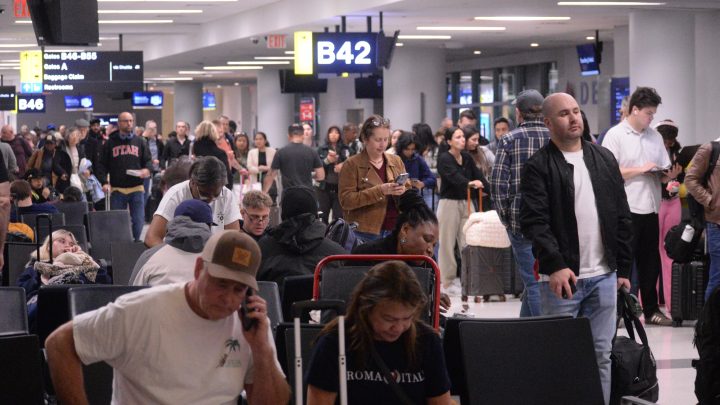
The nationwide ground stop on Friday, Nov. 13, lasted more than four hours and was lifted at about 8:15 p.m. ET, WJLA reported. Duffy has said the trouble followed copper-to-fiber work at El Dorado, Ark., and that a router in Amarillo, Texas, “started to flood our system,” according to Yahoo News. Duffy said the router sent more than 1,000 connection attempts every four to five seconds, WJLA reported. Hewlett Packard Enterprise, which owns router maker Juniper Networks, said its devices “did not fail,” according to Yahoo News.
“I think we have all concluded that it’s not a cyber issue,” Bedford said, according to WJLA. Nick Daniels, president of the National Air Traffic Controllers Association, said the FAA “still uses floppy disks in some cases to update computers,” Yahoo News reported. More than 9,000 flights were canceled Friday and about 6,700 on Saturday, according to Yahoo News.
What auditors have found on cybersecurity
The FAA’s announcement calls E-IDS “secure” but does not describe its cybersecurity safeguards or how it is separated from other networks. Stay Current News did not find an FAA statement that describes those safeguards.
Federal auditors have looked at FAA cybersecurity for years. In a July 2026 report, the Government Accountability Office said the FAA had fully carried out three of seven protect-and-defend objectives and partly carried out the other four. It said the FAA’s zero trust plan fully matched only three of seven federal practices and that the agency had not reported all of its cybersecurity spending to the Office of Management and Budget. The Transportation Department agreed with GAO’s four recommendations.
A 2015 GAO report said modernization would “employ digital and Internet-based computer-networking technologies, exposing the ATC system to evolving and growing cybersecurity risks,” and that “significant security-control weaknesses remain.” GAO lists those recommendations as carried out.
In 2021, the Transportation Department’s Office of Inspector General found the FAA had moved 45 air traffic systems into its highest-impact security category without formal policies for the stronger controls those systems need. The FAA agreed with all six recommendations. The inspector general announced a new audit of those controls in September 2024.
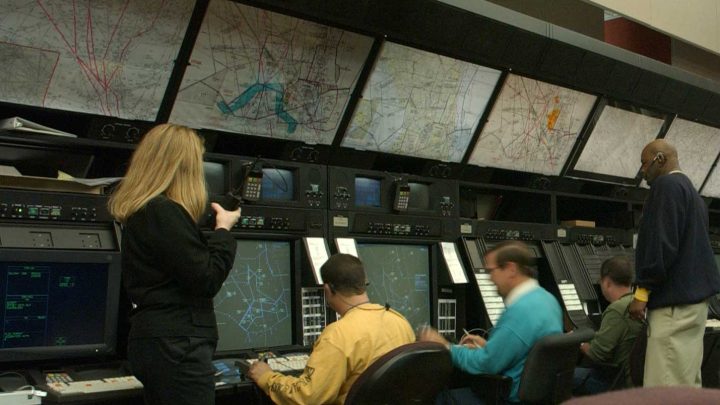
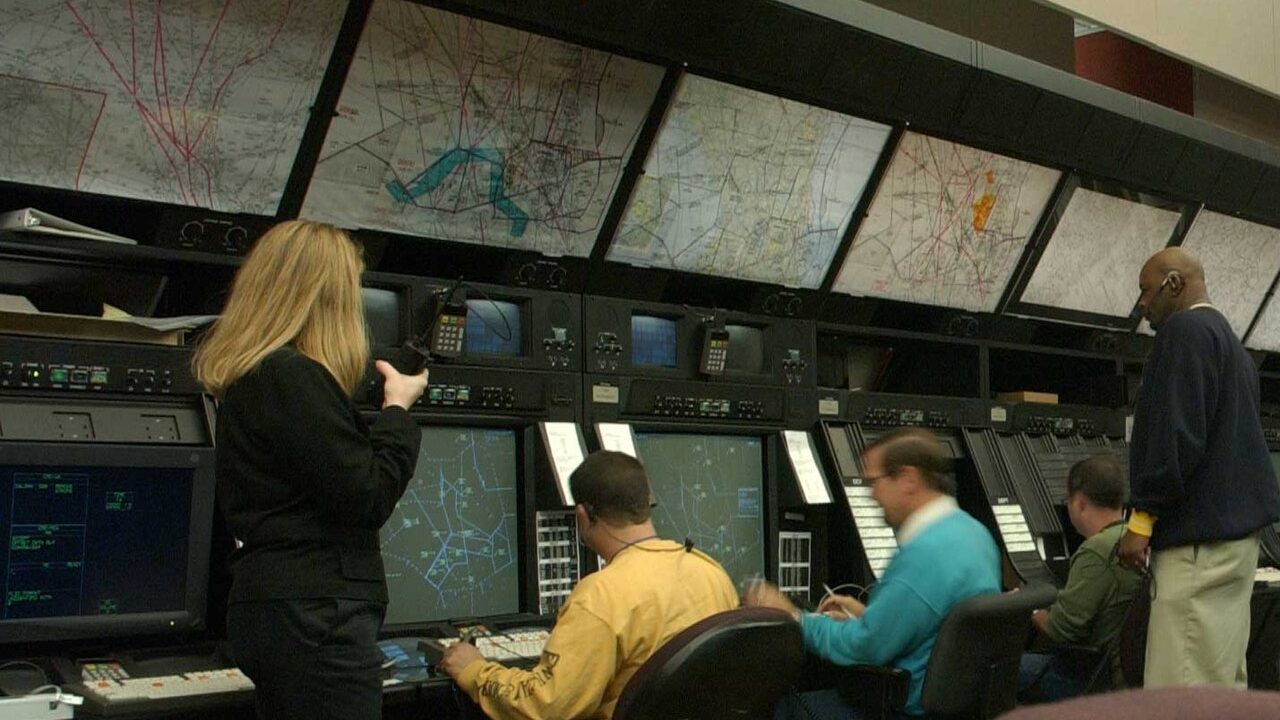
Photo: File photo of controllers at the FAA’s Washington Air Route Traffic Control Center. Federal Aviation Administration / Wikimedia Commons, public domain.