FACTS
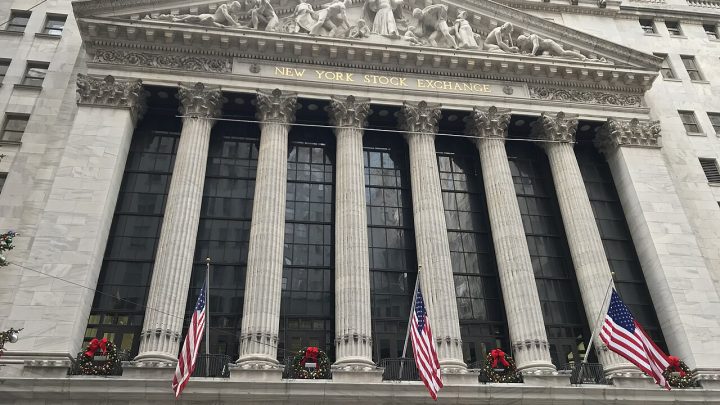
The S&P 500 fell 265.44 points, or 3.7%, to 6,910.39 on Friday, Nov. 20, 2026, and closed in a correction, more than 10% below its Oct. 6 record, according to The Associated Press. The Nasdaq composite fell 5.3% and turned negative for the year as an AI stock sell-off deepened. The Dow Jones Industrial Average fell 949.73 points, or 1.9%, to 48,147.33.
How the major indexes closed
The Nasdaq composite fell 1,261.47 points to 22,617.73, and the Russell 2000 index of smaller companies fell 73.32 points, or 2.8%, to 2,581.79, according to AP closing figures. For 2026 so far, the Nasdaq is down 2.7%, while the S&P 500 is up 0.9% and the Dow is up 0.2%, the AP figures show.
A correction is a decline of at least 10% from a record. The AP reported that the S&P 500’s last correction ended in March 2025 and that Friday’s loss was the index’s seventh in a row, its longest losing streak since the COVID-19 pandemic began in 2020. Fortune reported that the Dow also ended the day in correction territory.
For the week, the S&P 500 fell 8.6%, the Dow fell 8% and the Nasdaq fell 10%, according to the AP. The AP said it was the S&P 500’s worst weekly loss in more than 18 months. Reuters reported that the Nasdaq’s weekly drop was its biggest since 2020 and that the Cboe Volatility Index, a measure of expected market swings, rose 33% to 37.
What drove the AI stock sell-off
The AP reported that investors are questioning whether the large market values and heavy spending of artificial intelligence companies are justified. The AP said worries about a bubble grew after midterm election results favored candidates who want to slow the construction of data centers.
Michael Antonelli, a market strategist at Baird, told the AP that the idea that AI spending can keep supporting the stock market is “ending as we speak.” He added: “But I don’t think that means that the overall bull market that started in October 2022 is over.”
Richard Saperstein, chief investment officer at Treasury Partners, told Reuters: “The stock market is going through an AI repricing, reflecting an environment of slowing data center buildouts.” Lawrence Gillum, chief fixed income strategist at LPL Financial, told Reuters: “We still think that the AI trade has legs.”
Chris Larkin, head of trading at E*Trade from Morgan Stanley, told Fortune: “Given the solid economic and fundamental backdrop, the move appears to be highly sentiment driven.”
Interest rates were also in focus. Futures traders priced in a high likelihood that the Federal Reserve will raise rates in December, according to CME FedWatch data cited by Fortune and Reuters. The yield on the 10-year Treasury fell to 4.93% from 5.04% late Thursday, the AP reported.
Nvidia, Anthropic and chip stocks
Nvidia fell 13.8%, its ninth decline in 10 trading days, the AP reported. Reuters reported that the Securities and Exchange Commission is examining Nvidia’s accounting. The stock has fallen more than 25% since a scandal involving co-founder and former CEO Jensen Huang began earlier this month, according to the AP. Yahoo Finance reported that Huang resigned Nov. 12 and that Colette Kress is serving as interim CEO.
Other chip stocks also fell sharply. Micron Technology fell 13.9%, Advanced Micro Devices fell 13.3% and Broadcom fell 12.1%, while the PHLX Semiconductor Index fell 10.7%, according to the AP.
Anthropic, which began trading on the Nasdaq on Thursday after the largest initial public offering on record, fell 9.1% to $88.30 in its second day of trading, the AP reported. That is above the $83 IPO price but about 23% below the brief high of $115.10 the stock reached Thursday, the AP said. The shares rose about 17% on their first day, as Stay Current News reported.
Most stocks outside technology rose Friday. General Mills gained 3.7%, according to the AP. Overnight, Japan’s Nikkei and South Korea’s Kospi each fell more than 5%, the AP reported.
Stay Current News covered Thursday’s decline in Dow falls 1,101 points as S&P 500 posts sixth straight loss. More business news is on the Stay Current News Business page.