FACTS
The Lean and Mathlib communities, which build and maintain the Lean proof-checking software and its main math library, said Saturday, Nov. 21, 2026, that they have “full confidence” that a Riemann Hypothesis proof released a day earlier by Levent Alpöge, a mathematician at Anthropic, is correct. Alpöge said he found the proof working with Claude, Anthropic’s chatbot, and released it as about 17 million lines of Lean code. Mathematicians say understanding the ideas in the proof will take longer.
What the Lean statement says about the Riemann Hypothesis proof
In a joint statement endorsed by the Lean FRO and the Mathlib Initiative and posted at 13:55 UTC on Nov. 21, the communities said they certify that both the statement and the proof are correct. “We have full confidence that Alpöge’s proof of the Riemann Hypothesis is correct, and we congratulate him on this achievement,” the statement says.
The groups listed four checks. The theorem proved is Mathlib’s own definition of the Riemann Hypothesis, which experts in Lean and number theory reviewed. Dozens of people compiled the library without errors and reproduced the same proof export file. Two tools confirmed that the theorem matches Mathlib’s statement. And the proof was checked by Lean’s kernel and several independent checkers, some written in other programming languages, the statement says. The statement says the mathematical community’s work to “explain the new ideas in this proof” is still ahead.
Alpöge’s announcement
Alpöge posted a four-page note on his website on Friday, Nov. 20. “I believe I have, working with Claude, discovered a proof of the Riemann Hypothesis,” he wrote, according to Quanta Magazine. He said the proof also covers the stronger Generalized Riemann Hypothesis and that he obtained the result on Nov. 16, Quanta reported.
A written version grew past 250,000 pages, so Alpöge released only the Lean code, the New York Post reported. “I decided to only present Lean,” he wrote, and “Claude far outpaced me near the finish line.” Alpöge said he has not yet mastered all of the surrounding mathematics, The Next Web reported.
The announcement came the day after Anthropic’s stock market debut on Thursday. Alpöge wrote that there is “an obvious cynical view, to do with the timing, but it is false,” according to The Next Web. Quanta reported Friday that Anthropic had not made an official announcement about the result.
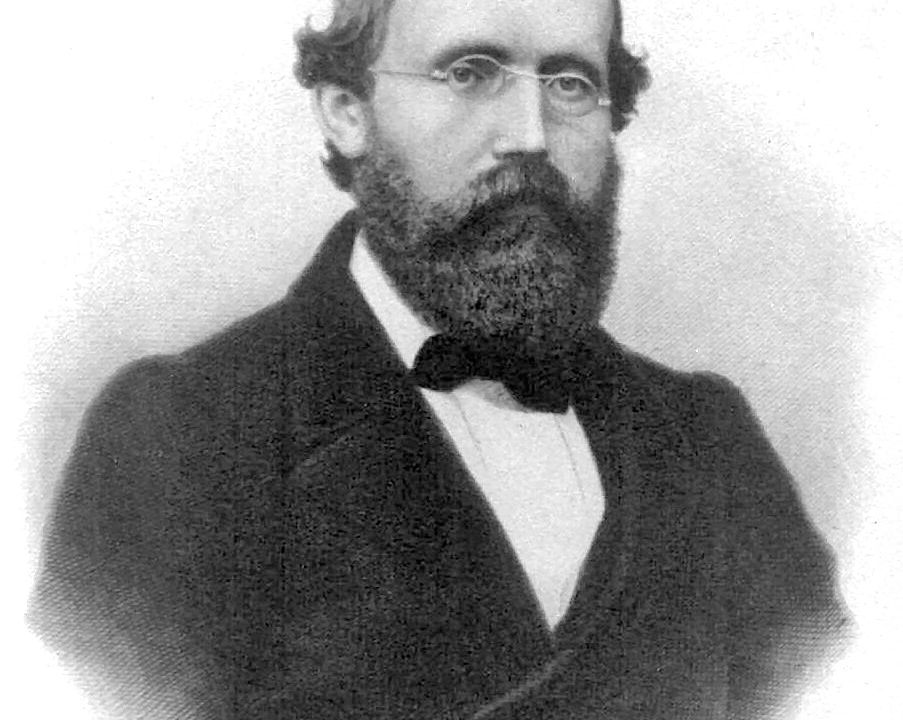
Bernhard Riemann proposed the hypothesis in 1859. It concerns how prime numbers are spread along the number line, and it is one of the Clay Mathematics Institute’s Millennium Prize Problems, each carrying a $1 million prize, The Next Web reported.
How mathematicians have responded
Andrew Sutherland of the Massachusetts Institute of Technology was the first to compile the proof on Friday, Quanta reported. “Honestly the chance that anything is fishy here is approximately zero,” Sutherland said, according to The Next Web. Simon DeDeo of Carnegie Mellon University, who also compiled it, told Quanta, “I’d be very surprised if there were any secret tricks.”
James Maynard, a professor at the University of Oxford and 2022 Fields Medal winner, told IBM Think, “I suspect that the proof will turn out to be correct, although even checking the Lean verification will take some time.” Youness Lamzouri of the University of Lorraine in France said, “If this claim happens to be true, it will be a huge achievement,” and that understanding the proof could take months or years, IBM Think reported.
Other mathematicians objected to how the proof was released. Brian Conrad of Stanford University called releasing a proof that its author does not fully understand “frankly completely outrageous,” The Next Web reported. Maksym Radziwiłł of New York University said the four-page writeup contains “nonsensical statements,” according to Quanta. Alpöge said the argument contains “massive” mathematics and predicted it “will be massively simplified, likely immediately,” Quanta reported.
A second, human-written manuscript
Hours after Alpöge’s announcement, Ravi Vakil, a Stanford mathematics professor and president of the American Mathematical Society, posted a 940-page manuscript on the Generalized Riemann Hypothesis by Alessandro Masullo, a Stanford postdoctoral scholar, Quanta reported. Vakil said it is “all human, with no AI.” He later updated his post to note problems that other mathematicians had raised and said “all issues need to be resolved to the satisfaction of the community,” The Decoder reported.
More tech news is on the Stay Current News Tech page.