FACTS
The first week of the COP31 United Nations climate talks in Antalya, Turkey, ended on Saturday, Nov. 14, with limited progress on the most divisive issues as government ministers began arriving, Climate Home News reported. Disputes remain over fossil fuels, a proposed electrification target and money to help countries adapt. A first draft of the main decision text is expected early next week.
This story updates Stay Current News’ report Guterres tells COP31 climate summit ‘fossil fuels must go the way of the dinosaurs’ with the state of the negotiations after the first week.
Where the COP31 talks stand
U.N. climate chief Simon Stiell called progress “constructive” at a press conference on Saturday, Climate Home News reported, and said a plenary session that day would show which issues were the most contested. The Open Press reported that Stiell urged negotiators to “move swiftly to the hardest issues.”
According to Climate Home News, the main disagreements involve:
- The cover decision: the summit’s overall political statement, a first draft of which is expected early next week.
- Electrification: a proposed target of 35% electrification by 2035.
- Emissions cuts: a negotiating note under the Mitigation Work Programme described as “heavily bracketed,” meaning much of the wording is still disputed.
- Adaptation finance: African countries want at least $120 billion a year by 2035.
Climate Home News also reported criticism of a draft note on a Just Transition Mechanism and a proposal from Arab nations, Mexico, South Korea and Switzerland to hold COP meetings every two years instead of every year.
Fossil fuel language
Saudi Arabia and Russia are resisting language on moving away from fossil fuels, and India opposes limits, The Open Press reported. The United States is not taking part for a second year, and President Donald Trump has called global warming “a hoax,” the outlet reported.
Australia’s Chris Bowen, who co-leads the talks with Turkey’s Murat Kurum, said the presidency would “steer consensus to the strongest, most ambitious possible outcome,” according to The Open Press. Greenpeace said the options on the table needed to be strengthened, the outlet reported.
Brazilian President Luiz Inacio Lula da Silva said, “We have the moral obligation,” as he backed hosting a third conference on moving away from fossil fuels, Climate Home News reported.
Climate and migration
Amy Pope, director general of the International Organization for Migration, said more than 200 million people are at risk of being displaced by climate change, The Open Press reported.
What comes next
Ministers will spend the second week trying to settle the issues negotiators could not. Climate summits often run past their scheduled closing day as countries bargain over final wording, and every decision needs consensus among nearly 200 parties.
More coverage is in the Stay Current News Science section.
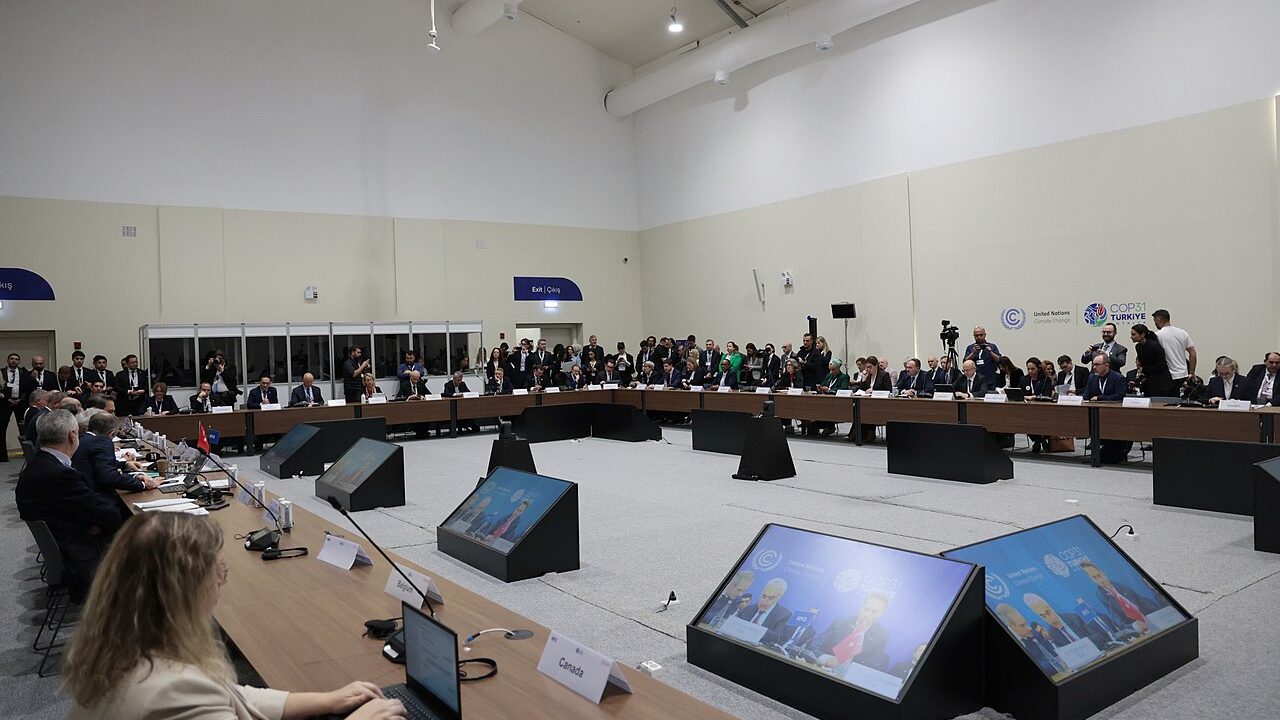
Photo: The COP31 Presidency’s energy ministerial meeting in Antalya, Turkey, on Nov. 10. Necati Savas / European Union / Wikimedia Commons, CC BY 4.0.