FACTS
The Supreme Court on Monday, Nov. 16, declined to hear the Trump administration’s appeal in a dispute over terminated UC research grants, leaving in place lower court rulings that blocked the cuts for University of California researchers whose grants were ended over diversity, equity and inclusion concerns. The court acted without comment or noted dissent in Trump v. Thakur, SCOTUSblog reported.
The UC research grants case
The administration ended grants to University of California researchers after a January 2025 executive order that directed the government to end programs linked to diversity, equity and inclusion, The Associated Press reported through KSAT. The grants came from agencies including the National Endowment for the Humanities and the National Science Foundation, the Los Angeles Times reported. Six UC professors filed the class-action lawsuit.
A federal district court in California issued a preliminary injunction in June 2025 covering two groups of researchers, according to SCOTUSblog. The U.S. Court of Appeals for the 9th Circuit reversed that order for researchers who received form termination notices and upheld it, on First Amendment grounds, for researchers whose grants were cut over DEI concerns.
The 9th Circuit said the government may fund some programs and not others but may not use “its power to punish or suppress disfavored expression,” the Los Angeles Times reported through The Spokesman-Review. The case covers only part of the administration’s research funding cuts, the AP reported.
What each side argued
Solicitor General D. John Sauer told the justices that the First Amendment “does not require taxpayers to continue funding projects that the government concludes no longer serve the public interest,” SCOTUSblog reported. He said that “vast sums of taxpayer money are at stake” and that “the UC system took in more than $4 billion in federal grant money in 2024,” according to the Los Angeles Times.
The lower courts found that the administration “likely ran afoul of the First Amendment,” the AP reported. Erwin Chemerinsky, dean of the University of California, Berkeley, School of Law, urged the court to turn down the appeal, saying that “ideologically driven attempts to suppress a particular point of view are presumptively unconstitutional in funding,” according to the Los Angeles Times.
Other orders on Monday
The court also declined to hear Khatibi v. Yip, a challenge by California ophthalmologist Azadeh Khatibi to a state requirement that continuing medical education courses cover implicit bias. Justice Clarence Thomas, joined by Justice Samuel Alito, dissented. “First Amendment protections do not give way simply because a State heavily regulates speech,” Thomas wrote. Justice Neil Gorsuch said he would have heard the case, SCOTUSblog reported.
In Novotny v. Moore, the court turned down a challenge to Maryland laws that ban firearms in places such as government buildings, school grounds, public transportation and state parks. Thomas wrote that he was “skeptical” of the appeals court’s ruling but agreed with denying review, adding: “In an appropriate and more narrowly focused case, however, we should consider the scope of States’ authority to ban firearms in ‘sensitive places.'”
Stay Current News earlier reported that the court agreed to review the Trump asylum proclamation at the southern border.
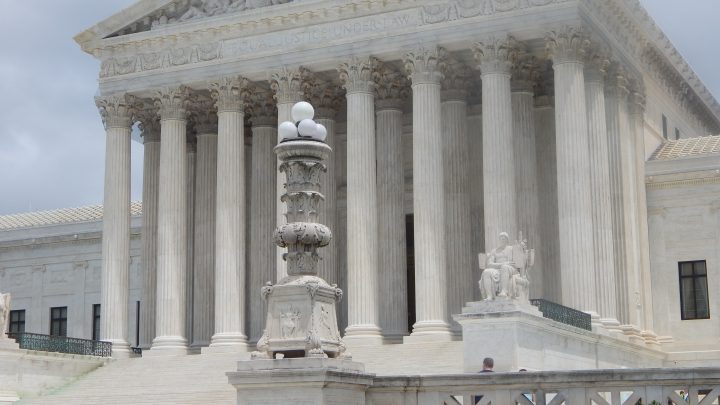
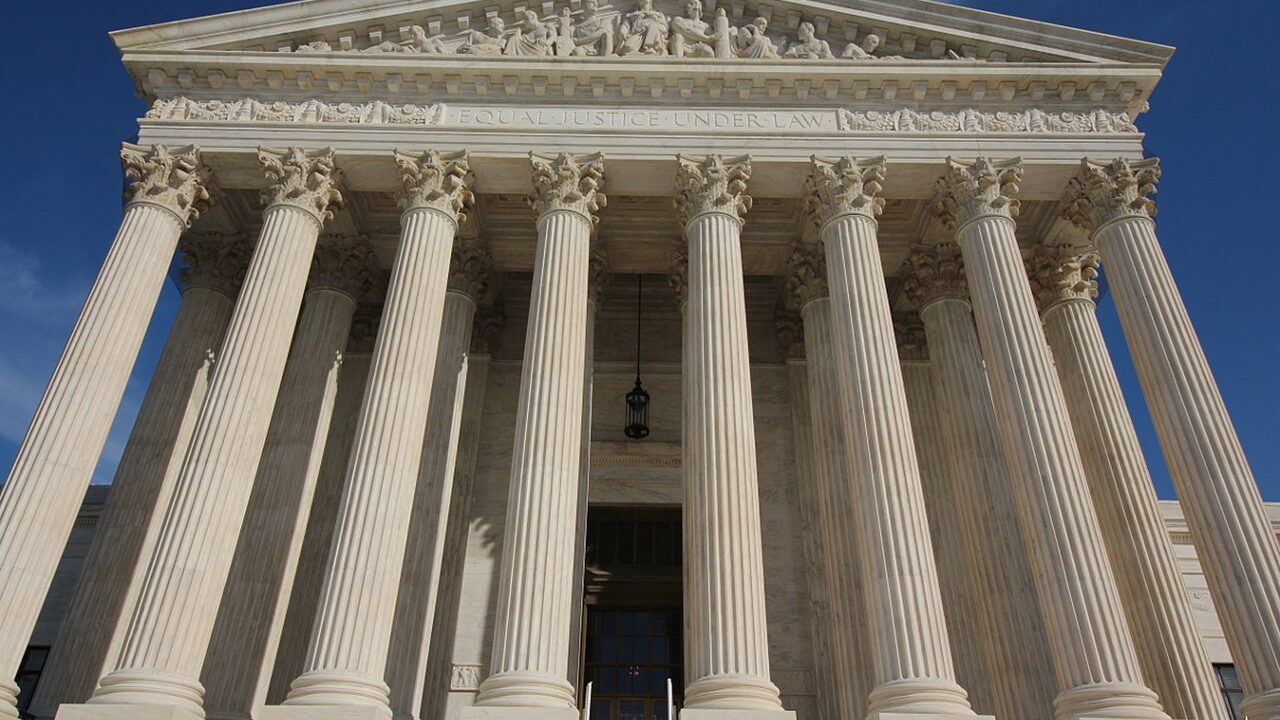
Photo: File photo of the west front of the Supreme Court Building. Architect of the Capitol / Wikimedia Commons, public domain.