FACTS
The Senate voted 62-33 on Thursday night, Nov. 19, to pass the Bipartisan American Affordability and Jobs Act, a permitting bill that would speed federal reviews for energy and infrastructure projects and require data centers to pay more toward the power grid. Fifteen members of the Democratic caucus joined 47 Republicans in voting yes, according to the Senate roll call. The bill now goes to the House.
How the Senate passed the permitting bill
The vote came at 9:30 p.m., according to the Senate roll call. Senate leaders used a House bill, H.R. 2347, as the vehicle and replaced its text with a substitute written by Sen. Shelley Moore Capito, a West Virginia Republican, which the Senate adopted 69-27 on Nov. 18. The bill is often called BAAJA.
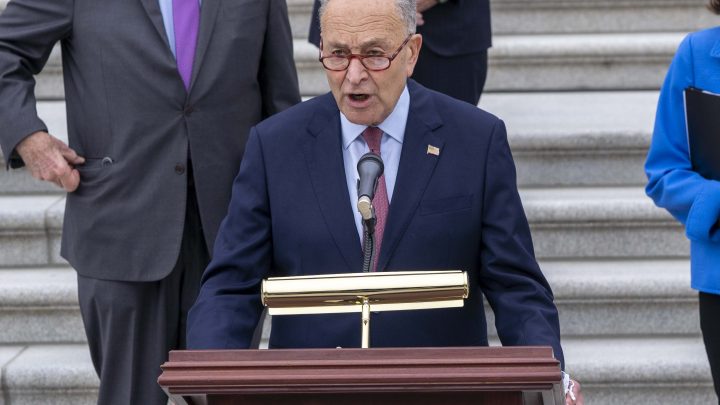
Senate Minority Leader Chuck Schumer of New York and Sen. Angus King, a Maine independent, voted yes. Republican Sens. Josh Hawley of Missouri and Mike Rounds of South Dakota voted no, and five senators did not vote.
The bill was written by Capito, Sen. Mike Lee of Utah, Sen. Martin Heinrich of New Mexico and Sen. Sheldon Whitehouse of Rhode Island, The Associated Press reported. AP said it passed without amendments from rank-and-file senators after Republicans blocked an effort by Sen. Jeff Merkley of Oregon to get votes on a range of amendments.
What the bill would do
The bill would shorten reviews for power plants, transmission lines, pipelines, mines and other projects, AP reported. It would change parts of the National Environmental Policy Act, the Clean Water Act and the Endangered Species Act, and limit court challenges.
If a court finds an agency broke the National Environmental Policy Act or the National Historic Preservation Act, the court could not halt construction but could order the agency to fix its paperwork, the Deseret News reported. The bill would also rewrite the historic preservation review known as Section 106.
Data centers would contribute about $55 billion toward transmission costs over the next decade, according to a Heinrich fact sheet cited by the Deseret News.
What supporters say
President Trump urged passage, calling the bill a “BIG WIN for U.S. ENERGY INDEPENDENCE and DOMINANCE,” AP reported. Industry groups for clean energy developers and the oil and gas sector back it.
“We are going to make it easier to build in America again, and make life more affordable for American families,” Lee said, according to AP. He also said, “Your household electricity bill will not go up due to a data center being built,” the Deseret News reported.
Capito said in a statement that “the passage of permitting reform in the Senate finally became reality” and urged House leaders to move quickly. King told WABI the bill is “a lot better than the status quo” and that “there is no clear alternative to it.”
What opponents say
Environmental groups including the Sierra Club and the National Wildlife Federation oppose the bill over its limits on court review and its changes to environmental laws, AP reported. Jen Duggan, executive director of the Environmental Integrity Project, called it “a gift to some of the biggest polluters in America,” according to AP.
Sen. Alex Padilla, a California Democrat, said the bill would “irreparably harm California and the 109 federally recognized tribes who call California home,” AP reported. Sen. Maria Cantwell, a Washington Democrat, said “this bill, as it’s currently drafted, is not the answer,” according to AP.
Tribal groups including the National Congress of American Indians oppose the Section 106 changes, ICT reported. “Cuts to Section 106 are an attack on tribal sovereignty, on our cultures, and on our identity as Native people,” tribal attorney Jessie Barrington said, according to the Deseret News. Lee said the bill’s deadlines address reviews that could otherwise be delayed indefinitely and that this “is not an insult to tribal sovereignty,” the Deseret News reported.
What happens next in the House
The House passed its own, narrower permitting bill last year, AP reported. The Senate bill faces an uncertain vote in the House during the lame-duck session, and it is unclear whether House Republican leaders will make it a priority, News9 reported. Sen. James Lankford, an Oklahoma Republican, told News9, “We think it’s still possible by the end of the year.”
Opponents, including NDN Collective’s Wizipan Garriot, have urged the House to reject the bill and take up permitting in the new Congress in January, ICT reported.
Stay Current News reported on the Senate’s earlier votes in Senate sets Wednesday votes on permitting bill overhaul. More politics news is on the Stay Current News Politics page.