FACTS
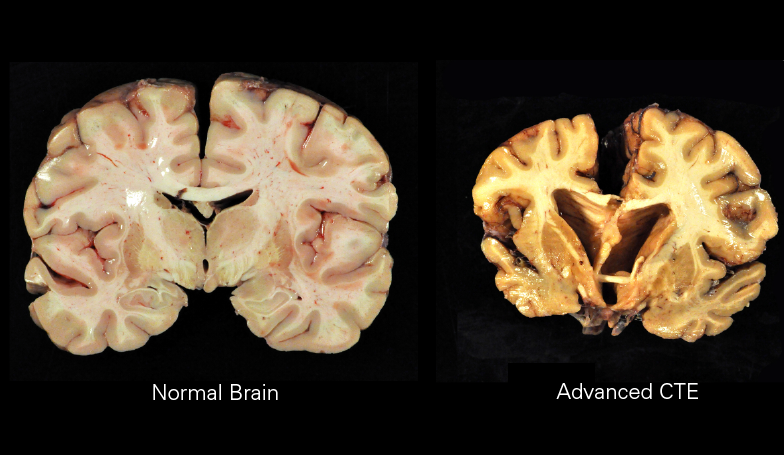
Two small studies published in the journal JAMA suggest that a blood marker may one day help detect advanced chronic traumatic encephalopathy, or CTE, in living people, The Associated Press reported on Nov. 19. CTE, a brain disease linked to repeated head impacts, can now be confirmed only by examining the brain after death. Lead author Michael Alosco of Boston University and Dr. Rudolph Castellani, a Northwestern University neuropathologist who was not involved, say the work is early, and no CTE blood test is ready for use in patients.
The Boston University CTE blood test study
The newer study, published online Nov. 19 by researchers at Boston University, Banner Health and other institutions, looked at 21 male former football players who had blood drawn while alive and later donated their brains, according to the JAMA paper. Twelve played professionally, seven in college and two only in high school, Boston 25 News reported.
Autopsies found CTE in 18 of the men, 16 at a high stage and two at a low stage, and three had no CTE. Blood levels of a tau protein fragment called eMTBR-tau were significantly higher in those with high-stage CTE than in those with low-stage or no CTE, the paper reported. Median levels were 0.019 picograms per milliliter in people with CTE and 0.001 in those without it. Levels in stages I and II were not significantly elevated, the paper reported.
Five participants with CTE also had Alzheimer’s disease, and their levels were highest. A separate Alzheimer’s marker, p-tau217, was elevated only in people with Alzheimer’s, Boston University said. Corresponding author Michael Alosco, co-director of clinical research at BU’s CTE Center, said combining the two markers may best detect CTE and tell it apart from Alzheimer’s, according to the university.
“This is a game changer,” Alosco said, according to Boston 25 News. He added, “We are still in the discovery phase, and it’s a small sample size.” In the university’s release, he said the findings must be confirmed in larger autopsy studies before a test could move toward approval and clinical use: “But we aren’t there yet.” The work was funded by the National Institute of Neurological Disorders and Stroke and the National Institute on Aging, BU said.
The Washington University study
A team at Washington University School of Medicine in St. Louis published a related JAMA study online Nov. 13 using a version of the same marker, called eMTBR-tau243, the university said. Among 229 participants, the team tested blood from 11 people with CTE confirmed at autopsy. Levels were higher than in healthy people and rose with disease severity, but the test could not reliably identify early-stage CTE, the university said.
“This is not going to be a standalone biomarker,” co-senior author Chihiro Sato said in the release, which also says, “The test has not been validated for diagnosing CTE.” Washington University and researcher Randall Bateman hold equity in C2N Diagnostics, which has licensed the technology, according to the release.
Limits and outside caution
The BU paper lists its own limits: a small convenience sample of male football players from one research center, few low-stage cases, no clinical cutoff values, and a CTE-negative group that was younger, with a median age of 49 compared with 68. Boston 25 News reported that the test is not approved by the Food and Drug Administration and is not publicly available.
Dr. Rudolph Castellani, a Northwestern University neuropathologist who was not involved in the research, called the link interesting but “very preliminary, requiring much larger studies to see if there’s a real connection,” AP reported. In an editorial in JAMA, Dr. Günter Höglinger and Dr. Carla Palleis of Ludwig Maximilian University of Munich noted that abnormal tau appears in several brain diseases that often overlap in older adults, and said the two studies together “represent an important step,” according to AP.
If the findings hold up, Alosco estimated a blood test could reach FDA approval within five years, WBUR reported. He told ESPN he is “cautiously optimistic” about that timeline.
More health news is on the Stay Current News Health page.