FACTS
A federal jury in Brooklyn on Tuesday, Nov. 24, convicted Chinese technology company Huawei and three of its subsidiaries of charges including conspiracy to steal trade secrets, bank fraud and violating U.S. sanctions on Iran, the U.S. Justice Department said. The jury acquitted Huawei of racketeering conspiracy, the most serious charge, The Associated Press and Reuters reported. The Huawei verdict came after what the Justice Department called a three-month trial, and Huawei says it will appeal.
What the Huawei verdict covers
The jury found Huawei guilty on 10 of the 12 counts it faced, Reuters reported. According to the Justice Department, the convictions include conspiracy to steal trade secrets, wire fraud conspiracy and wire fraud, bank fraud conspiracy and bank fraud, conspiracy to defraud the United States, conspiracy to violate the International Emergency Economic Powers Act and violations of that law, and money laundering conspiracy.
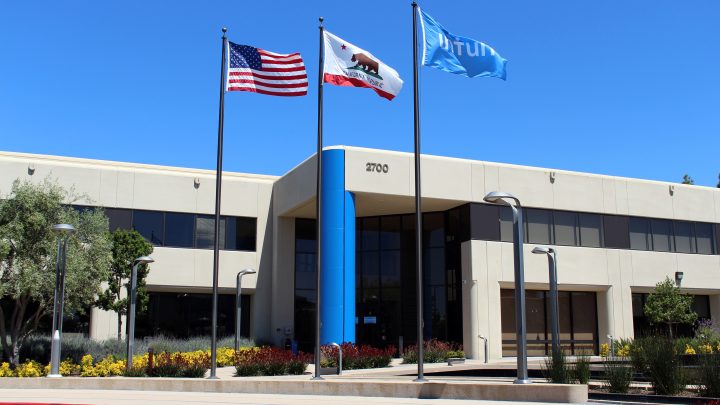
The department said the convicted companies are Huawei Technologies Co. Ltd. and three subsidiaries: Huawei Device Co. Ltd. of China, Futurewei Technologies Inc. of San Jose, California, and Huawei Device USA Inc. of Plano, Texas. The U.S. Attorney’s Office for the Eastern District of New York said each count was charged against one or more of the companies; its release does not list which counts applied to each one.
The jury acquitted Huawei of racketeering conspiracy, a charge prosecutors used to argue that the company operated as a criminal enterprise, according to The Associated Press and Reuters. The Independent reported that the jury also acquitted Huawei of obstruction of justice.
U.S. District Judge Ann M. Donnelly presided over the trial, the U.S. Attorney’s Office said. Sentencing is set for Sept. 14, 2027, and could include criminal fines, forfeiture and restitution, according to the Justice Department.
What prosecutors said the evidence showed
The Justice Department said Huawei and its subsidiaries provided services that helped the government of Iran build internet backbone and mobile network systems, and that Huawei lied about its activities in Iran to banks to obtain billions of U.S. dollars. The department said Huawei did business in Iran under the name Skycom and described Skycom as a business partner rather than a wholly owned subsidiary.
On trade secrets, the department cited cases involving a T-Mobile testing robot, Cisco router source code, Fujitsu equipment and the companies CNEX and Quintel. The Independent reported that jurors saw a video that prosecutors said showed a Huawei employee putting a component of a T-Mobile testing robot into a backpack.
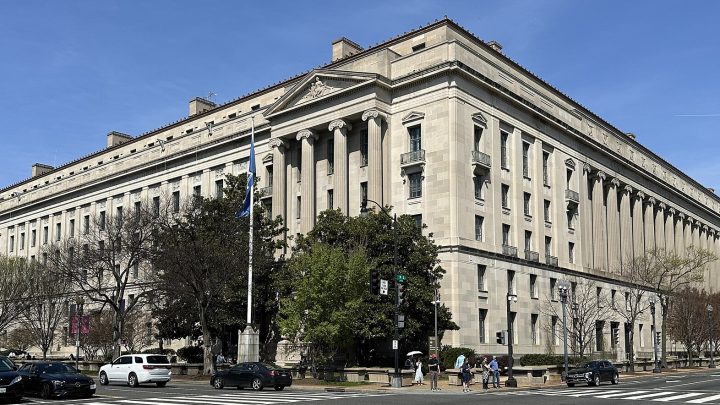
“No person or company is above the law,” Attorney General Todd Blanche said in the department’s release. U.S. Attorney Joseph Nocella Jr. of the Eastern District of New York said, “Few crimes are as serious as Huawei’s decades-long pattern of endangering U.S. national security.”
Huawei’s response
In a statement dated Nov. 25 from Shenzhen, China, Huawei said the jury “acquitted Huawei of the government’s RICO charge.” The company added, “We believe the government’s remaining charges are equally without legal or factual merit.” Huawei said the five trade secret disputes the government cited were civil cases resolved over the past 20 years, and that “No court ever found Huawei liable for willful intellectual property misappropriation.” It said it will “thoroughly review the relevant verdicts and take all necessary legal actions to defend our rights and interests.”
Huawei lawyer Brian Heberlig said the company will appeal and that the racketeering acquittal “repudiated the central government narrative in the case,” the AP reported. In closing arguments, Heberlig told jurors, “Huawei didn’t steal its way to success,” according to the AP. Huawei’s lawyers argued at trial that investigators took isolated wrongdoing by a few of the company’s more than 200,000 employees and presented it as a broad conspiracy, the AP reported.
Background on the case
The Justice Department first filed criminal charges against Huawei in early 2019 and later expanded them, the AP reported. Reuters reported that charges added in 2020 alleged a trade secrets conspiracy spanning two decades, and that prosecutors called more than 60 witnesses at trial while the defense called 15.
Huawei has not been allowed to sell equipment to U.S. carriers for years over security concerns, and Canada and Britain have also blacklisted it, according to the AP. The company sells smartphones and telecommunications equipment around the world.
More business news is on the Stay Current News Business page.